
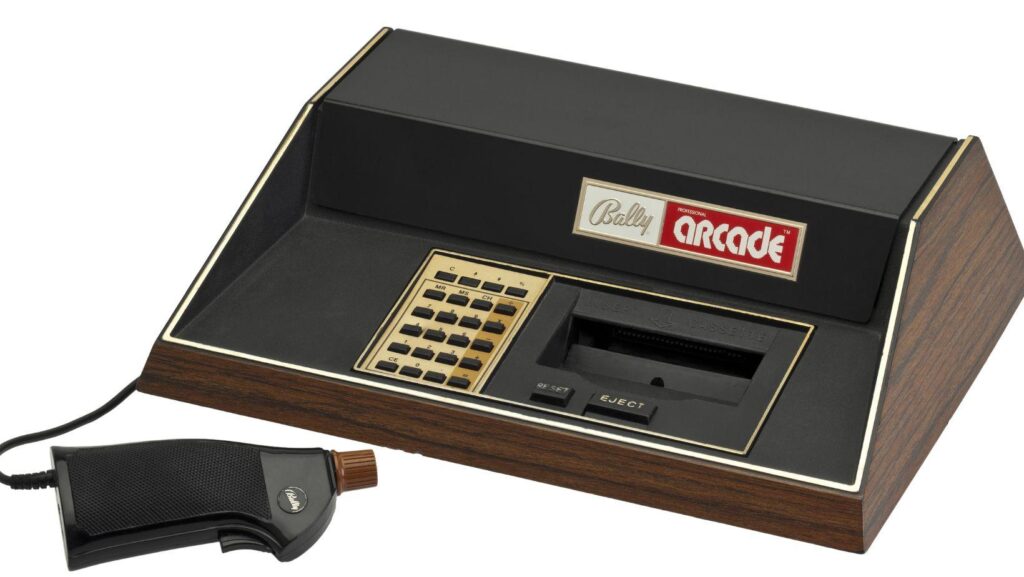
If you had spent your weekends in an arcade during the 1980s and then been sent straight to 2026, the gaming industry would be completely unrecognisable. It all started as a relatively simple form of entertainment where people aimed for high scores, and there were local competitions. Now, the industry is on a global scale, with millions of users connected across various countries and devices.
The Golden Age of the Arcade
For traditionalists, the 1980s can be seen as the golden age of arcade gaming. The likes of shopping centres, seaside resorts, and arcades soon became gathering places where players would compete for local bragging rights.
If you look at the likes of Pac-Man, Space Invaders, and Donkey Kong, you can see that these are simple by today’s standards, yet they created immense competition. Usually, the aim was simple: survive as long as you can and get yourself on the scoreboard.
Arcades were social spaces as much as gaming venues. Players watched each other, shared tips and celebrated impressive achievements. In many ways, they laid the foundation for the competitive gaming culture that would emerge decades later.
Home Consoles Changed Everything
It was the arrival of early home consoles that really changed things. These were introduced during the late 1980s and throughout the 1990s. Consoles from the likes of Nintendo and Sega meant that players could enjoy gaming from the comfort of home.
This completely changed how people interacted with games. Rather than having to rely on a limited number of arcade titles, players suddenly had access to hundreds and could develop a personal hobby.
At the same time, multiplayer experiences evolved, and there was a swing back to social gaming. Friends gathered around televisions for local competitions, creating a different but equally important social element. Whether racing, fighting or competing in sports games, gaming remained rooted in shared experiences.
The Internet Creates a New Era
Perhaps the biggest changes in gaming came about with the roll out of internet access. This allowed players to compete against opponents from all around the world. While early uptake was slow, this didn't last long.
Online multiplayer completely transformed player expectations. Skill was no longer judged on a small local community, but against a global base of players. Rankings meant more and competition became intense as communities grew.
Massively multiplayer games introduced persistent online worlds, while competitive shooters, strategy games and sports titles attracted increasingly dedicated audiences. The concept of gaming as a connected activity became the norm rather than the exception.
Streaming and Esports Expand the Audience
The next significant change came via the likes of streaming platforms and esports. Watching other players play suddenly became a form of entertainment in its own right. It led to the creation of new audiences, as well as an entirely different business model.
While competitive gaming had been confined to bedrooms and cafes, it was suddenly moved into sold-out arenas. Professional players took on celebrity status, and the tournament brought in millions of viewers.
Modern Entertainment Platforms Offer More Choice
Looking at where we are today, offerings are even broader. We are at a stage where many platforms look to combine multiple forms of entertainment. This means that users can explore different experiences without having to move to separate services.
This matches general changes in behaviours. Modern users of any service are looking for convenience and flexibility. They want platforms that offer numerous options without the need to head elsewhere. Improvements in technology have made this much easier to achieve and deliver.
Platforms such as Wepari.com show how digital entertainment continues to expand beyond traditional categories. Users expect seamless experiences that provide variety while remaining easy to navigate. This is a trend that is influencing many areas of the online entertainment industry.
Competition Remains at the Heart of Gaming
Yes, technology has had a huge impact on changing gaming, but it’s fair to say that the competitive nature that defined early arcade titles is still alive and strong. The likes of leaderboards and tournaments still push players in the same way that old-fashioned scoreboards used to.
The biggest difference has to be scale. The experience was once limited to a few local players, but is now open to millions around the world. Improvements in technology have helped to expand the audience, while the core appeal stays the same.
The same desire to compare performance and test abilities against others can be seen across numerous forms of digital entertainment. In some areas, including sports betting, users are drawn by a similar sense of engagement, analysis and competition, albeit through a different type of experience.
Looking Ahead
Gaming has seen some unbelievable changes since the arcade boom of the 1980s. What started as a small, almost local experience has now become something that has spread across the world. The likes of multiplayer games, streaming, and esports show how experiences have become connected, and users have more choice than ever before.